
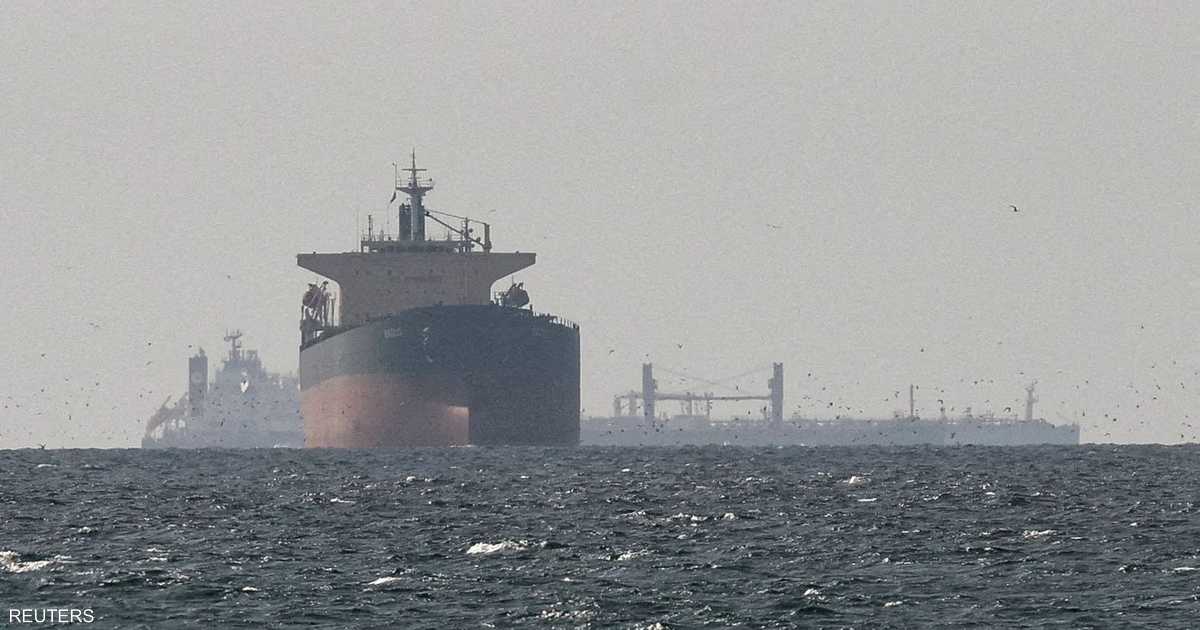
On Tuesday, US warships intercepted six commercial vessels observed leaving an Iranian port, forcing all of them to turn back. This occurred in the early hours as the administration of US President Donald Trump attempted to enforce the closure of the strategic Strait of Hormuz by Tehran.
The US Central Command (CENTCOM) stated in a statement that the American blockade, which entered into effect on Monday amid a truce between the US and Iran, involves 10,000 American troops, more than 12 US Navy ships stationed in the Gulf of Oman and the Arabian Sea, and a group of fighter and surveillance aircraft monitoring commercial ships in the region.
Two American officials told the Washington Post that the naval forces executing the blockade are not stationed near Iranian ports or the Strait of Hormuz itself.
Iranian forces planted mines in the Strait of Hormuz, a major point of contention in negotiations, following the outbreak of war more than six weeks ago. Additionally, the narrowness of the passage and shallow waters make any vessel passing through vulnerable to attack.
One official noted that “the area of US forces deployment is the Gulf of Oman,” explaining that the participating US warships “wait for the appropriate moment, after monitoring ships leaving Iranian facilities and the strait, before intercepting commercial ships and forcing them to turn back.”
The official added, “There is only one entrance and one exit. We control the entire region.” According to the officials, the six instances where commercial ships were returned did not require military escalation by US forces to compel them to turn back.
One of them clarified that “the blockade applies only to ships that were still in an Iranian port or that entered after 10:00 AM Monday Eastern Time.”
Earlier on Tuesday, it was reported that two ships in Iranian ports “breached the blockade,” but they left before the deadline set by the US, according to tracking data.
The officials confirmed that US warships do not escort intercepted ships back to Iranian ports.
However, CENTCOM stated in a statement that US forces “support navigation freedom for ships crossing the Strait of Hormuz to and from non-Iranian ports.”
Before the US and Israel launched the war on Iran, which closed the Strait of Hormuz, approximately 20% of the world’s energy supplies of oil and gas passed through it daily.
The global rise in energy prices increased pressure on the Trump administration to find a solution to the conflict, although the negotiations held in Islamabad a few days ago concluded without reaching an agreement.