Leaders of the G7 group held a meeting on Wednesday where the American president appeared ambiguous and uncommitted. Some participants emerged with the impression that he seeks to end the war soon, while others believed he leans towards continuing the escalation.
French President Emmanuel Macron stated after the call that the United States must clarify its final goals, adding that “the US president must clearly define what his goals are and the pace he intends to follow in operations.”
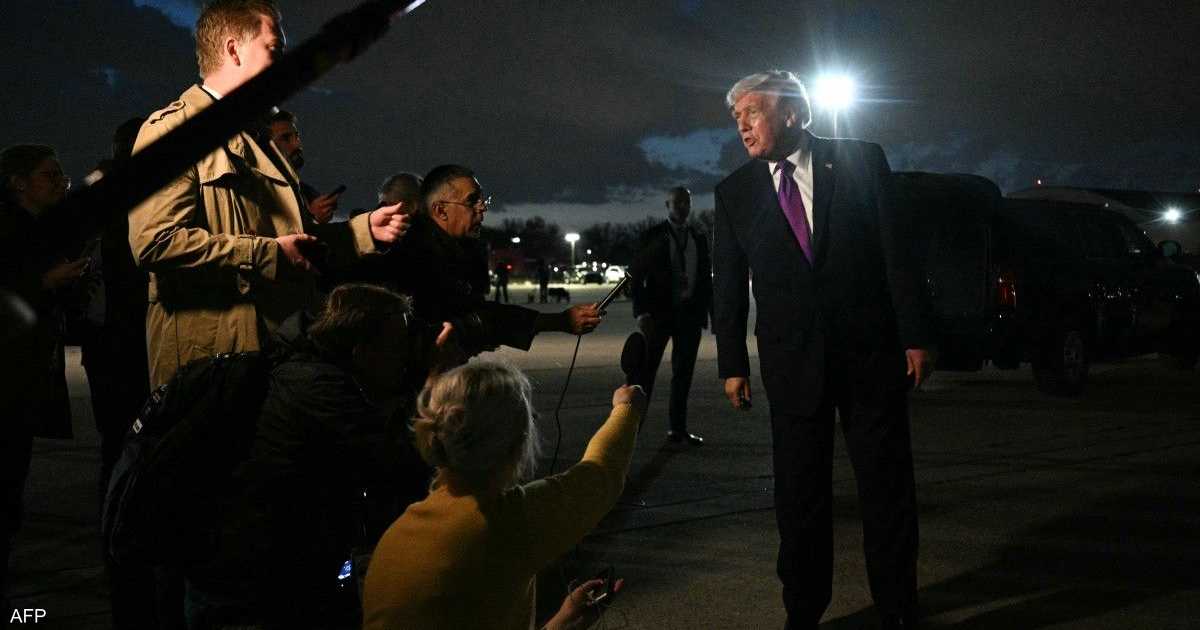
Contradictory statements were issued by the US president during the same day. Before the call, he indicated that the war might end “soon,” considering that “the main goals against Iran have largely been achieved.” However, while leaving the White House to attend an election rally in Kentucky, he affirmed that the United States “has not finished yet” striking Iran, adding that the military will continue “more operations.”
At the rally, Trump declared to his supporters that the United States “has been victorious since the first hour,” but he reiterated the necessity of “completing the mission and not withdrawing early.”
When Trump announced the war on February 28, he set four main objectives for the military operation: destroying the Iranian navy, weakening its capabilities to launch ballistic missiles, preventing it from acquiring nuclear weapons, and stopping its support for allied groups in the region.
A White House spokesperson confirmed that these objectives have not changed, denying media claims of a “misleading narrative regarding conflicting messages.”
According to indicators presented by the US administration, Iran has suffered significant losses, including the destruction of a large part of its navy, damage to missile launchers and stockpiles, and extensive damage to the military industry.
However, the United States and Israel have not yet secured approximately 450 kilograms of highly enriched uranium held by Iran in its nuclear facilities. Additionally, the heavily fortified “Peak Ax” facility near Natanz, believed to be built about 100 meters underground, has not been targeted.
While the US and Israel are fighting together, sources suggest differences exist regarding the concept of victory. According to reports, Israeli Prime Minister Benjamin Netanyahu aims for the war to pave the way for a regime change in Iran, while the United States views this as a potential side effect rather than a primary goal.
Israeli officials believe Trump does not plan to end the war within the next two or three weeks, although he may make a sudden decision if he considers his goals achieved. The initial strike resulted in the killing of Supreme Leader Ali Khamenei and about 40 senior security officials, which was expected to quickly destabilize the system, though this has not yet occurred.
A source close to the US president stated that he is enthusiastic about continuing the war for at least three or four additional weeks before making a final decision on its course.
Operations during this phase are expected to focus on targeting the Iranian Revolutionary Guard Corps (IRGC) in an attempt to weaken it to the point where an internal uprising against the regime can erupt. The source noted that the US administration believes the IRGC is “not weak enough yet,” but it may reach that stage within a few weeks.
Conversely, an Arab official participating in mediation efforts between Washington and Tehran stated that Iran has no intention of ending the war according to a timetable set by the United States. The official clarified that Tehran demands international guarantees to prevent the recurrence of the conflict, rather than a temporary ceasefire that could quickly collapse. The official pointed out that the absence of direct dialogue channels between the two sides, coupled with Trump’s statements hinting at a potential strike against the new Supreme Leader, Ebrahim Raisi, reduces the chances of de-escalation.
The official concluded by stating, “Starting wars is easy, but ending them is the real challenge.”